Quality control › QC case study
QC case study: a stretch-pants run we rejected, had re-produced and re-inspected before it shipped.
At the in-process inspection on 18 February 2026, five of the eight defect types in our production contract were present and the size grading had not been applied. We rejected the first run. The factory re-produced it, we re-inspected the new lot on 25 February 2026, all six findings had cleared, and only then did it ship. Extra QC charge to the buyer: $0.
Inspected on site by the Dawn Sourcing QC team in Yiwu, China · Released by Fred Lee · Page updated
- 18 Feb 2026First run: rejected5 of 8 contract defect types found
- NextReturned & re-producedDefective units pulled; grading corrected, not reworked
- 25 Feb 2026Re-inspectedAll six findings cleared, seven days after the first check
- VerdictApproved to shipThe buyer received the corrected lot, not the first run
What order was this, and how was it inspected?
- Product
- Stretch pants — long & shorts
- Colorways · sizes
- Black, gray, khaki, charcoal · M–5XL
- Stage
- IPQC — in-process, first production run
- Inspected by
- Dawn Sourcing QC inspector, in person on the factory floor
- Sampling standard
- ISO 2859-1 (AQL), General Inspection Level II
- AQL critical / major / minor
- 0 / 2.5 / 4.0
- Outcome
- Rejected, re-produced, re-inspected, shipped
- Withheld
- Buyer, PO number, style, order quantity, factory
This is the public, anonymized version of the report. Defect findings, measurements and dates are as recorded; only identifiers are withheld.
What did the inspection find?
We inspect against eight defect types that are written into our production contracts, so a finding is a contractual defect the factory has to correct — not a matter of opinion. Five of the eight were present.
- 1SewingFound
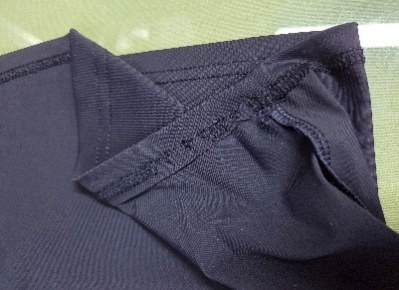
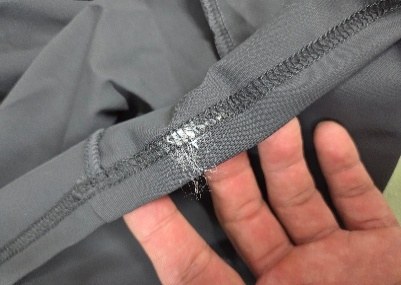
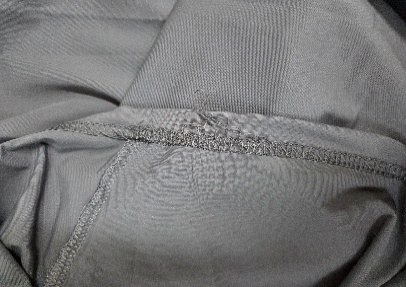
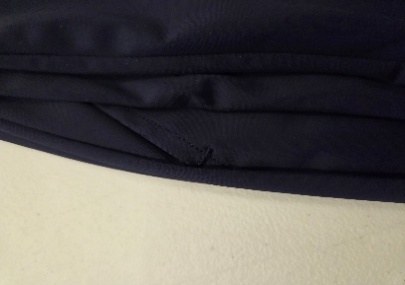
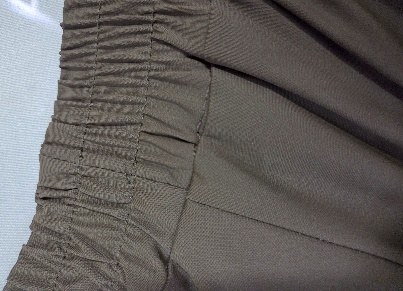
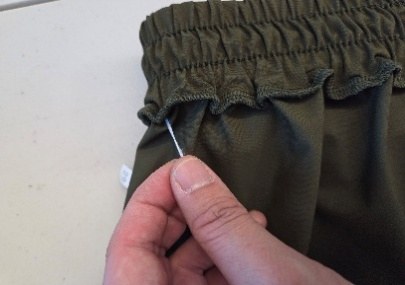
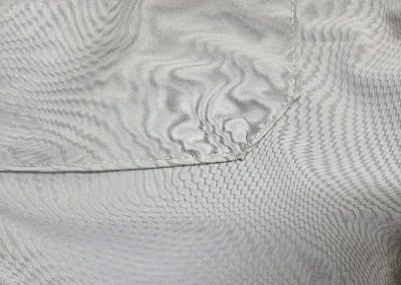
Pocket seams ran in the wrong direction — left and right mismatched on every colorway. Rise seam misaligned on almost every sample checked. Hem and belt sewing defective. Poor finishing at the hem, side pocket and belt.
- 2FabricFound
Fabric dents and press marks. The cut line at the hem was not consistent.
- 3Dyeing & colorNot raised
No finding on this inspection.
- 4MeasurementFound
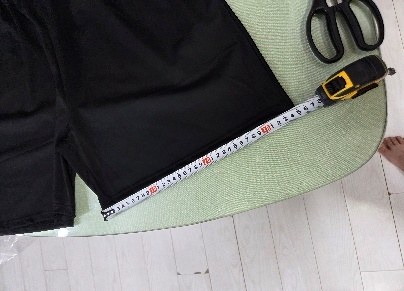
Left and right legs came out at different lengths, total length was inconsistent between colorways, and the shorts were cut short on thigh and length. Gray M and L measured identically — the size grading had not been applied.
- 5Print & embroideryN/A
Not applicable to this style.
- 6TrimsFound
Belt punching defective.
- 7ContaminationFound
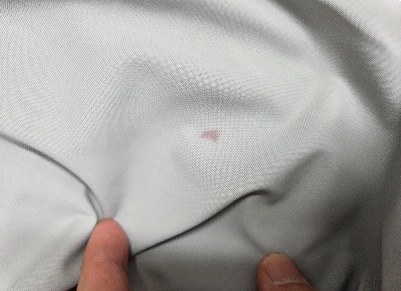
Foreign matter sewn into seams. Heavy contamination on khaki and charcoal, general soiling throughout.
- 8PackingNot reached
The goods never passed to packing.
Contract clause: any defect arising from a specification changed without the buyer's prior written approval is the factory's responsibility to correct.
Why was the whole run rejected instead of sorted?
Because the faults were in the run, not in a few units. Pocket direction was wrong on every colorway and the rise seam was misaligned on almost every unit checked. Sorting out bad pieces only works when defects are isolated; here the pattern and grading themselves were wrong, so the lot was rejected under the contract defect list.
| Class | Meaning | Allowed | Found | Result |
|---|---|---|---|---|
| Critical | Unsafe or unsellable; regulatory failure | 0 | 0 | Pass |
| Major | Would cause a return, complaint or markdown | — | 5 of 8 types | Reject |
| Minor | Visible deviation, unlikely to be rejected | — | — | — |
Lot size and sample counts are withheld with the order quantity, so AQL accept/reject numbers are not shown. The rejection rested on the contract defect list, not on a sample count alone.
What was done about each defect?
| Defect | Scope | What we did | Re-inspection |
|---|---|---|---|
| Pocket seam direction wrong, left/right mismatched | All colorways | Defective units pulled and returned; re-production ordered | Passed |
| Belt sewing defective | Recurring | Returned; re-produce wherever rework could not hold the ship date | Passed |
| Rise seam misaligned | Nearly all samples | Returned to the factory with the defective units | Passed |
| Measurement and grading errors | Multiple sizes | Re-production ordered — grading corrected, not reworked | Passed |
| Foreign matter in seams, soiling | Khaki, charcoal | Returned to the factory | Passed |
| Belt punching defective | Recurring | Returned to the factory | Passed |
Photos from the first inspection
Taken on 18 February 2026, in the state the goods were rejected in. Identifiers are withheld; nothing else is altered.
What did the inspection cost the buyer?
| Item | Detail | Cost |
|---|---|---|
| In-process inspection (IPQC) | Included in the unit price | $0 |
| Third-party pre-shipment inspection | Not required — caught in-process | $0 |
| Lab test / 100% inspection | Not required at this stage | $0 |
| Extra QC charge to the buyer | Inspection is part of the unit price | $0 |
Inspection is part of the unit price on every order, including third-party inspection or lab tests when an order needs them, so a buyer never receives a separate QC bill. How our four QC checkpoints work →
Final verdict
Approved to ship — after re-production and re-inspection.
Five of the eight contract defect types were present, and two of them — pocket seam direction and rise seam alignment — appeared across every colorway rather than in isolated units. Left and right legs came out at different lengths, and gray M and L came off the line at identical measurements, meaning the grading had not been applied at all.
The first run was rejected. Defective units were pulled and returned to the factory with the findings above, and the factory was told to re-produce rather than rework wherever rework would not hold the shipping date. Nothing from that run was released to the buyer.
The re-produced lot was inspected again before release. All six findings cleared and the goods shipped. That is the point of inspecting during production rather than after it.
- Inspected by
- QC inspector, Dawn Sourcing · 18 Feb 2026
- Released by
- Fred Lee, Dawn Sourcing · 25 Feb 2026, after re-inspection
Inspection and release are signed by different people, so whoever checks the goods is not the person who clears them to ship.
Questions about this inspection
What AQL standard was used?
ISO 2859-1 sampling at General Inspection Level II, with AQL 0 for critical, 2.5 for major and 4.0 for minor defects. The lot was rejected on the contract defect list because the faults ran through the whole run.
How long did it take from rejection to shipment?
The first inspection was on 18 February 2026 and the re-produced lot was re-inspected on 25 February 2026 — seven days later. It shipped after passing.
Did the buyer pay extra for this inspection?
No. The extra QC charge was $0. In-process inspection is included in the unit price on every order, and a third-party inspection or lab test was not needed because the problems were caught during production.
Does every order get an in-process inspection like this?
Yes. IPQC runs on every order during production, alongside incoming, final and pre-dispatch checks. See how we inspect apparel orders.
This is what we send you. Every order.Share one or two products and we'll come back with a cost-down and risk read — this documentation follows once you're in production.
Get a quote